Gear · Dog Training
Why trainers keep a plain loop of rope on their shoulder
It is not about the brand or the price. It is about what a slip lead is built to do, and why the pros keep one looped over a shoulder.
Shop the slip leash Lifetime guarantee, even covers chewing

Spend an afternoon at a group obedience class and watch the instructor's hands instead of the dogs. The person teaching is almost never holding the thick, padded, hardware-heavy leash most owners buy off the shelf. They are holding a plain loop of rope.
It looks almost too simple. Nothing to click, no bungee section, no neoprene grip. Just rope and a sliding loop. That simplicity is not a shortcut. It is the entire point, and once you understand why, it is hard to look at your own leash the same way again.
Collar and leash, in one piece of rope
Most leashes are an attachment. You clip them to the collar or harness your dog already wears, and that connection is steady and secure. It is exactly what you want for an ordinary walk, and it is the job a good clip lead does well.
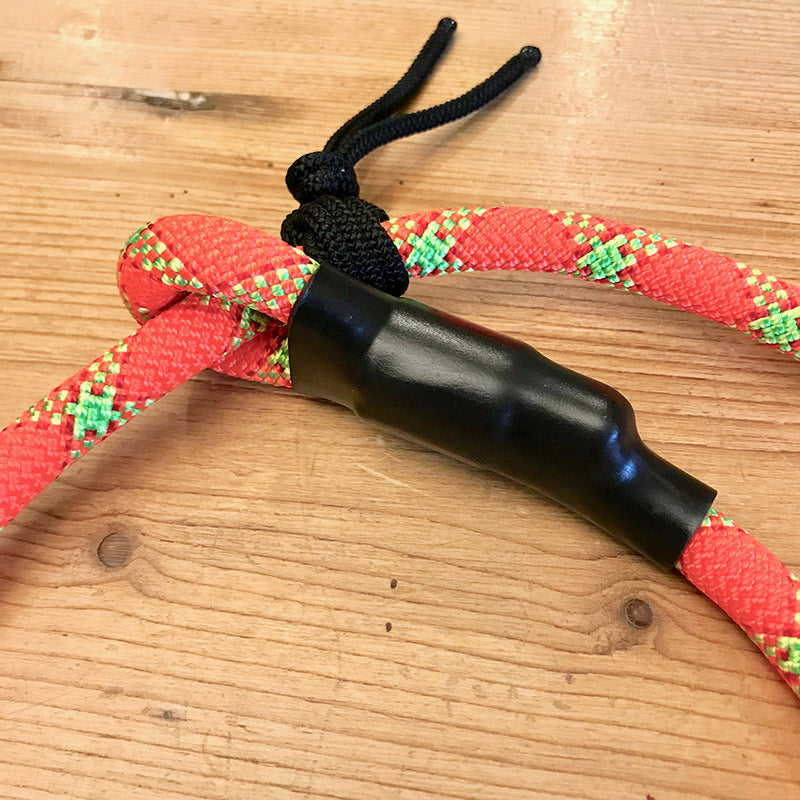
A slip lead is a different kind of tool. It is the collar and the leash in a single length of rope, with a loop that slides. It goes over the head and snugs in a second, comes off just as fast, and needs no other gear. That one difference, collar and leash in one continuous line, is what lets it do the thing trainers actually reach for it to do.
The reason trainers reach for it
A direct line you can speak through
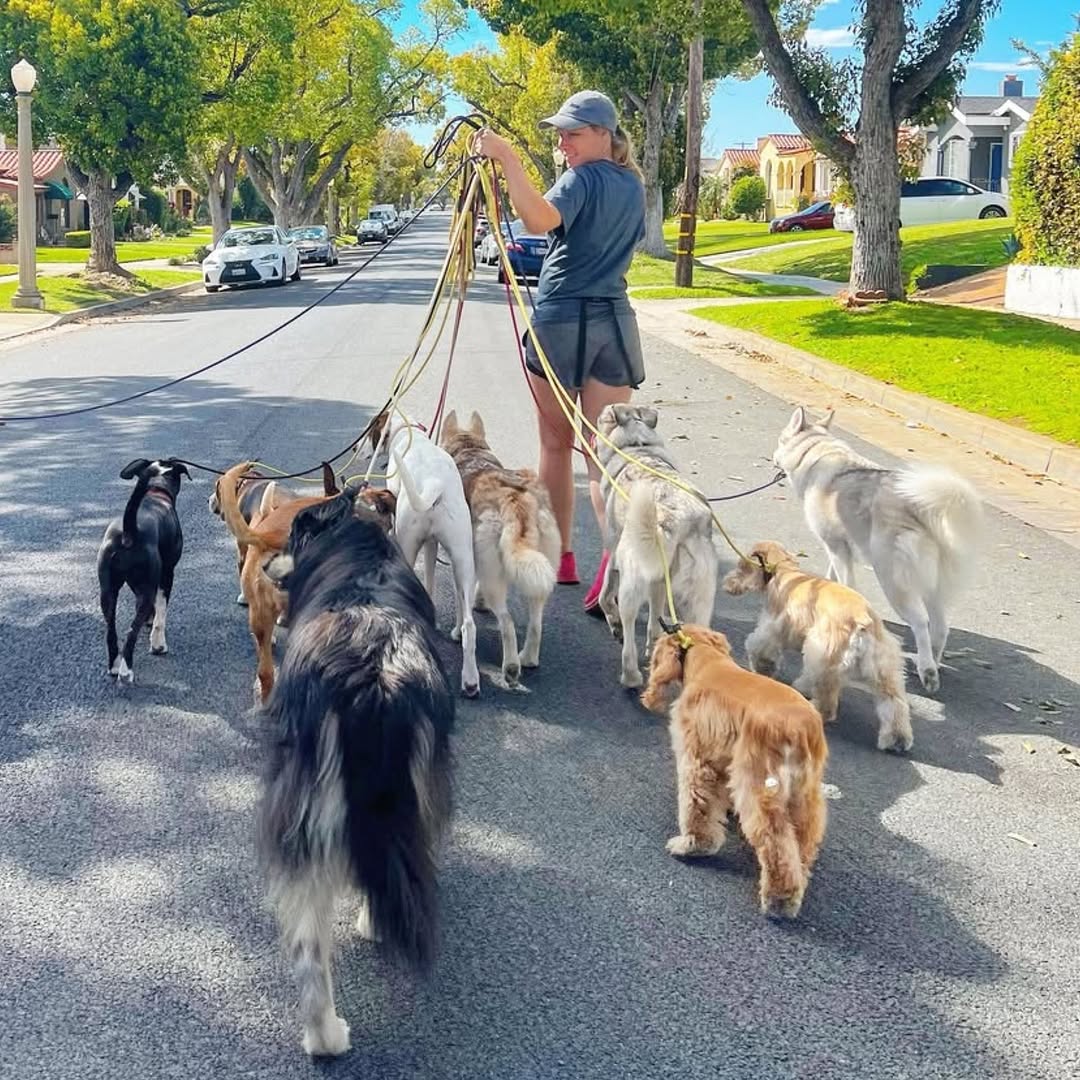
Because a slip lead is one continuous rope, a cue travels straight down it and arrives clear. Trainers use it for the thing dogs read best: pressure and release. The lead sits loose and weightless almost the whole walk. When your dog drifts out of position, a brief, light tightening gives a clear signal. The instant your dog responds, the loop falls slack and the pressure is gone.
Pressure on
A brief, light tightening. A clear adjust your dog can feel and read in an instant.
Pressure off
The loop falls slack the moment your dog responds. The release is the reward, and it is immediate.
That release is the reward, and it lands the instant your dog responds. Dogs learn fastest from contrast, and a slip lead gives them a clean one: a quick, quiet cue, then nothing. It is less like holding your dog in place and more like a tap on the shoulder, then letting go.
The goal is not to hold your dog back. It is to say something your dog can understand, then get out of the way.
Two tools, two jobs
Clip lead or slip lead?
Mountain Dog makes both, in the same upcycled climbing rope. Neither is better, they are built for different moments. Here is the honest difference so you can pick the one that fits.
Clip Lead
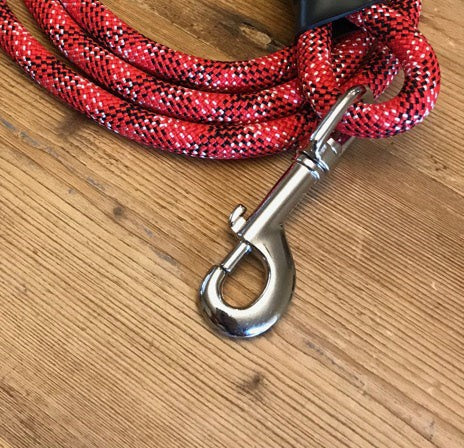
Connects to a collar or harness
What it is?
A lead that clips to the gear your dog already wears.
Best for?
Secure, predictable everyday walks with gear you trust.
Attachment style?
Clip on, clip off, in a moment.
Strength
A fixed, dependable point of connection.
Slip Lead
Collar and leash in one
What it is?
One continuous rope with a sliding loop, no extra gear.
Best for?
Training, communication, and quick control.
Attachment style?
Over the head and snug in a second. Nothing to clip.
Strength
A direct pressure-and-release line you can speak through.
Why the rope itself decides whether it works
A slip lead sends all of its communication through a single strand, so that strand has to do two jobs at once: carry a clear signal, and spread pressure gently across your dog's neck instead of biting into one thin line. Not every slip lead is built to do both.

Mountain Dog leads are made from genuine climbing rope, the certified kind rated to catch a falling climber. The rope is thick and round, so when the loop closes it spreads pressure across a wider surface rather than concentrating it. It is genuinely hard to wear out, because rope built to survive falls and grit barely notices a daily walk. And there is almost nothing on it that can fail: no snap hook to corrode, no stitched seam to tear, no plastic clip to crack in the cold. One continuous piece of proven rope is one less thing that can let go at the worst possible moment.
UIAA-certified rope
The same dynamic climbing rope rated to catch a falling climber, upcycled from the wall.
Finished by hand
Made one at a time, not stamped out by the thousand. Built to outlast the dog.
Backed for life
Covered for the life of the leash, chewing included. If it fails, it gets replaced.

Designed with you in mind
Made for the people at the other end of the leash
These leads were not drawn up in a boardroom. They are finished by hand for trainers, pack walkers, and handlers who are out in it every day and need a leash that simply does not quit.
The rope, the loop, the finish: all of it comes from how the tool actually gets used, not how it photographs on a shelf.
The guarantee
Chew through it? We replace it. For life.
Every Mountain Dog lead is backed for as long as you own it, chewing included. If it ever fails, we make it right. That is how much faith we have in the rope.
If you want one
The Standard Slip Leash
Real climbing rope, a clean sliding loop, nothing to corrode or snap. The same simple tool the pros keep on a shoulder, built to outlast the dog.
Standard Slip Leash
Length
Colour
Chew through it? We replace it. For life. Every Mountain Dog lead is backed for as long as you own it, chewing included.
- UIAA-certified rope. The same dynamic climbing rope rated to catch a falling climber, upcycled from the wall.
- Finished by hand. Made one at a time, not stamped out by the thousand. Built to outlast the dog.
- Backed for life. Covered for the life of the leash, chewing included. If it fails, it gets replaced.
Before you switch
Is a slip lead the same as a choke chain?
No. A choke chain is metal and concentrates force on a thin line. A rope slip lead sits loose, tightens gently and briefly, then releases the instant your dog responds. It applies a cue, not a punishment.
Is it safe for my dog?
Used the way it is meant to be, yes. It rests loosely and only tightens for a moment to give a cue, then loosens again. It is the everyday tool of professional trainers for exactly that reason.
How do I pick the right length?
Six feet suits most everyday walks. A shorter traffic length keeps your dog close in busy places. Longer lengths give room to roam on the trail.
The leash the pros carry
One leash that does the job the way it should
Real climbing rope, a clean sliding loop, and a cue your dog can actually read. Backed for the life of the leash.
See the slip lead